
Operational Innovation: Institutional Water Sales
Institutional Water connects schools, health clinics, and hospitals to reliable safe water and essential WASH services. It builds on our household-connection (HHC) program—leveraging the same treatment capacity, network reliability, and service protocols—while adding predictable institutional volume that helps stations break even on operational expenses and meet fund maintenance reserves. We also extend reach through third-party bulk delivery: vetted local entrepreneurs purchase bulk water from SWN stations and supply nearby villages without a station, widening impact across the catchment.
By the Numbers
24,000+
students & staff in India now with access
12686
direct-piped household connections
3,000+
hospital beds in India with safe water access
100%
service uptime in schools and hospitals
115
Schools to date in India and Ghana
57
Health Clinics to date in India and Ghana
9450+
students & staff in Ghana now with access

The Innovation
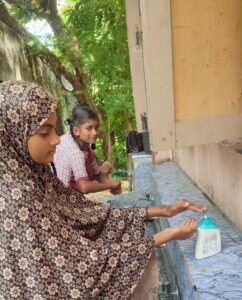
A standardized school/clinic package pairs safe drinking water with essential WASH upgrades and behavior change: fit-for-source point-of-use treatment, handwashing facilities, rainwater harvesting, and operator/custodian training. It also includes limited, upfront capital for WASH stations. The variable cost remains low because the water stations supplying water to schools/clinics already have treatment capacity and service protocols, allowing these institutional connections to add sustainable demand without materially increasing per-liter operating costs.
Why it Matters
Children and patients are most at risk from unsafe water. By serving institutions, SWN multiplies impact (many users, every day), demonstrates service reliability to governments, and strengthens the economics of the supplying station.
How it Works
- Provision of safe water that meets/exceeds national standard
- Regular water quality testing and spot-checks
- Fit-for-purpose treatment and dispensers
- Service and spare parts plan
- Handwashing facilities and hygiene education
- Basic rainwater harvesting/groundwater recharge when feasible
- School/clinic focal points trained with simple operational monitoring and feedback loop
- Meters/digital payments that ensure there are no receivables (Ghana only)
Local Adaptations
India – Schools and Hospitals
Hospitals: Five government hospitals connected to safe drinking water (patients, attendants, staff); more than 10 million liters dispensed; ~3,500 beds covered. Results include better patient care support and infection-control practices. NIMS Hyderabad invited a second Water ATM for its new 2,000-bed maternity block that, together with the current Water ATM, will supply safe water to over 15,000 people per day.
-
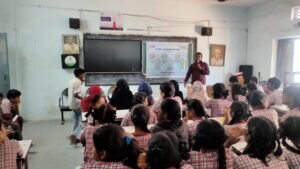
- Schools: About 80 schools and 50,000+ students and staff reached with safe drinking water, clean functional toilets, handwashing and hygiene education, and training in menstrual hygiene management. Reported outcomes include improved attendance (especially among girls) and a safer learning environment.
- Partners and recognition: Milacron, ADP, Pentair, CBRE (“Ek Pehal”), PepsiCo, Oracle. Pentair highlighted the collaboration in its sustainability report (14 schools in Gurugram; 5,000+ students with safer water). See featured video of work done with Milacron for more insights.
Ghana – Schools and Clinics
Schools and clinics within the catchment areas of 25 household-connection stations are supplied with safe, treated water – benefiting over 130,000 people annually. Beyond establishing piped connections, Safe Water Network provides onsite storage facilities to ensure uninterrupted water access. The program also partners with local teachers and health care providers to deliver regular orientation on proper handwashing with soap under safe running water. Each year, special activities are held to commemorate Global Handwashing Day, reinforcing messages on safe water fetching, transport, storage, and use to promote lasting hygiene practices

Why Institutional Sales Help Station Economics
- Station cost structure: high fixed costs with low marginal treatment cost. Adding schools and clinics increases throughput and spreads fixed expenses improving cost recovery and funding reserves for preventive maintenance.
- Distribution: where feasible, low-cost piped spurs or standpoints; otherwise, on-site treatment/dispensing at institutions.
Proof Points
- Independent water-quality spot checks (pass rate; frequency)
- Attendance changes in participating schools (overall and girls)
- Hospital feedback on infection-control practices or bottled-water displacement
- Uptime at institutions
- Customer satisfaction
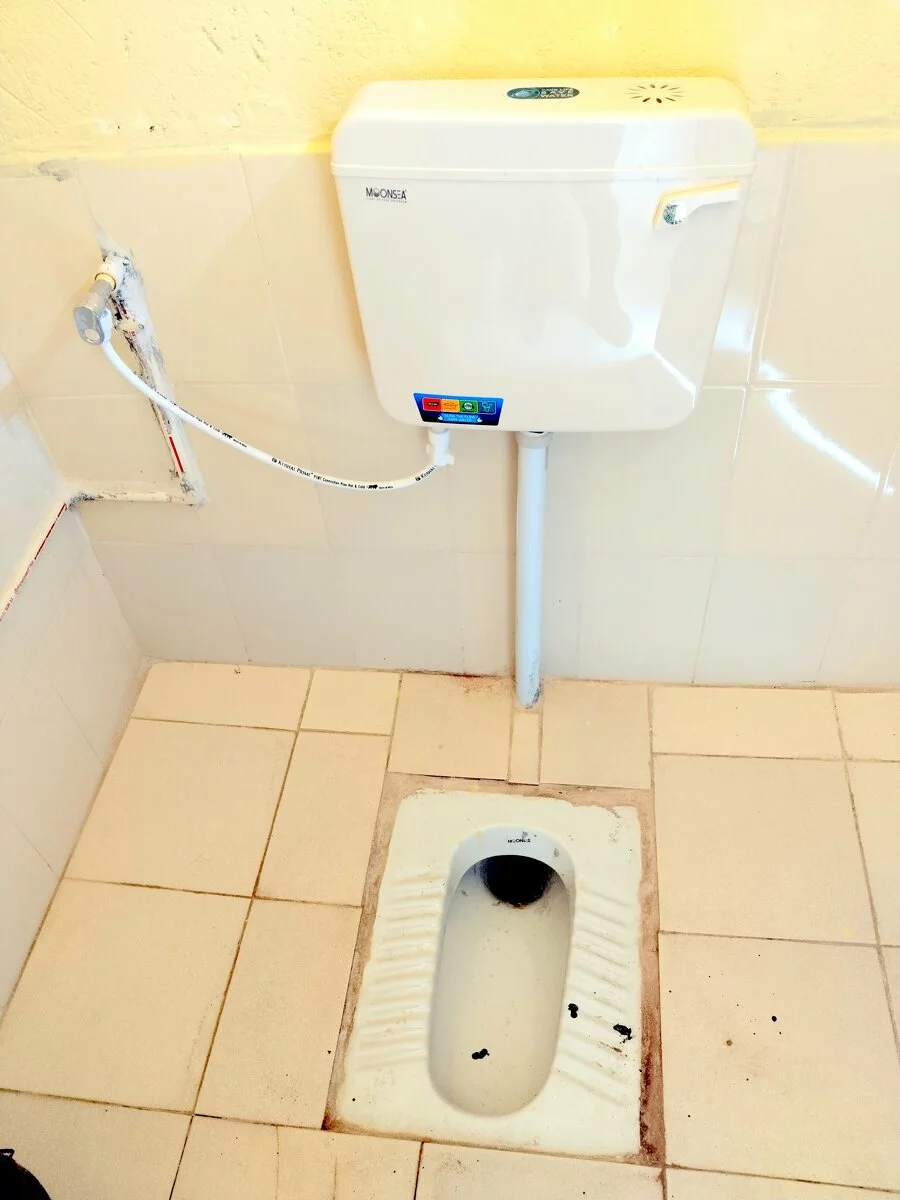
"This is a game-changer for the students, especially the girls - the availability of clean, functional toilets."
School Principal, Students, and Parents