
Operational Innovation: Water Security
Water security at SWN means more than protecting and preserving—it’s strengthening the capacity of communities to manage water resources so that safe water keeps flowing year after year.
By the Numbers
50,000+
people benefited by this effort in India
9500
trees planted
96
million liters of storage capacity created
993
Hecatres protected
82
Communities to date
5
Water bodies restoreD
The Innovation
We apply integrated water resources management (IWRM) to restore local hydrology and reduce supply risk for community systems. The approach blends pond and lake rejuvenation, soil–moisture conservation, erosion control, groundwater recharge, and community-led tree planting—implemented through clear standard operating procedures, multi-agency coordination, and community stewardship agreements.
Why it Matters
Safe water services collapse without dependable water sources. Climate extremes, land degradation, and over-extraction drive dry seasons longer. They also trigger more intense monsoon rains that, in the absence of water harvesting techniques, pose a threat, rather than an opportunity to at-risk communities. IWRM lowers volatility, improves groundwater recharge, and protects quality at the source, cutting downtime, diesel/energy use, and operating costs. It at once increases access to safe water and boosts agricultural and livelihood outcomes.
How it Works
- Diagnose the watershed and define hydrologic objectives tied to service reliability.
- Co-creation of water solutions with local government, line departments, and communities
- Secure “convergence” funding where possible, blending community savings, public investment, and corporate philanthropy.
- Execute a package of measures that combine de-siltation and deepening of water bodies, inlet/outlet repairs, check dams/contour trenches, soil and moisture conservation, and native tree planting.
- Build community capacity for operation, protection, and monitoring, and integrate with water station asset plans.
- Monitor results and revise planning, measuring water storage capacity created, recharge indicators, uptime gains, and livelihood signals.
Local Adaptations
Our model is flexible by design. We adapt to local conditions without compromising core values. We consider:
- Specific recharge/restoration structures and tree species
- Mix of public–private financing and convergence pathways
- Monitoring methods (manual, sensor-based, remote sensing)
- Community incentives and stewardship arrangements
India – IWRM at Village and Block Levels
-
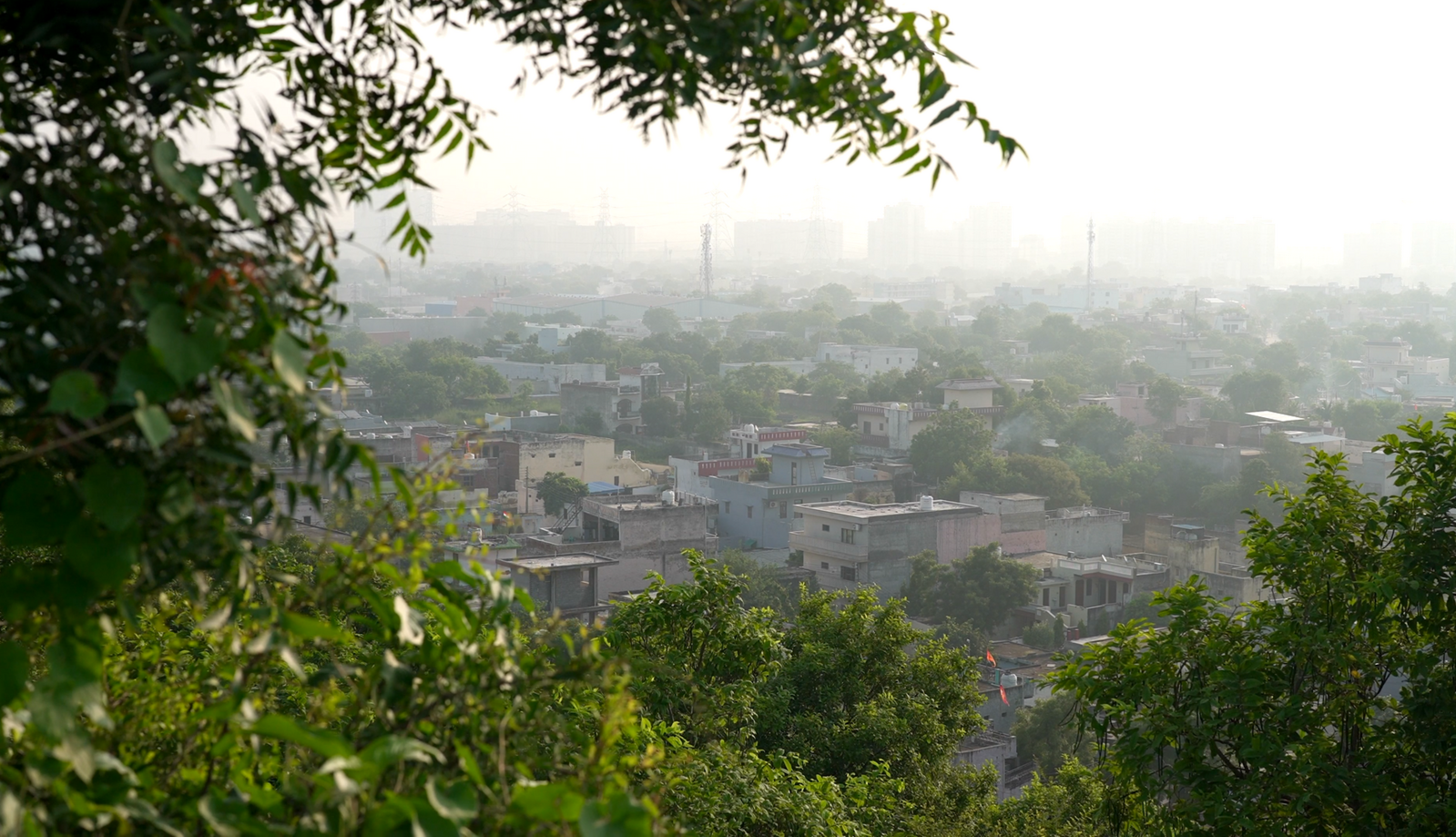
- Program elements include water-body rejuvenation, prevention of land degradation, through land restoration measures, soil and moisture restoration, rainwater harvesting, and community tree planting.
- At the end of 2024: 6 water bodies rejuvenated; 9,500 trees planted; >96 million liters of storage capacity created; 283 million liters of water harvested and recharged; initiatives directly benefiting >50,000 people while building local stewardship.
- Maharashtra (Karmala block, Solapur): SWN led a multi-stakeholder consultation (irrigation, agriculture, forest, rural development) to align wells and solar pumps within an integrated watershed plan, supported by the Azim Premji Foundation. Government “convergence” committed ~$150,000 for a three-year program across six villages (~8,700 people) in a highly climate-vulnerable, rain-fed zone.
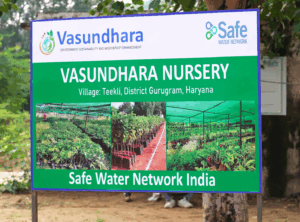
- Haryana (Gurugram): Teekli ponds of 270 hectares of catchment area with American Express; Bajghera Pond rejuvenation with CBRE India under the EkPehal program launched in early 2024.
- Karnataka: One pond rejuvenated at Byatha village with American Express, creating water storage capacity of 4.8 million liters and 29 million liters of water harvested and recharged.
Ghana – Scoping and Pilots
-
- Ghana’s program is at the inception stage. Teams are assessing watershed interventions adjacent to the 120 existing water stations, with focus on stations providing household connections. Priority areas include small-reservoir rehabilitation, soil–moisture works, community training, and the prevention of contamination of groundwater sources, including in areas subject to poorly regulated gold harvesting.
Proof Points
Storage and recharge: total storage created; number/area of water bodies restored; groundwater level trends where monitored.
- Service reliability: station uptime; dry-season continuity; diesel/energy savings.
- Community outcomes: agricultural productivity indicators, livelihoods supported, trees surviving at 12 and 24 months.
- Finance and leverage: government/partner funds mobilized (“convergence”), cost per liter of water storage capacity created, and cost per participating household.
- Governance: number of community stewardship groups trained and active.
How it Fits into our Strategy
Water security is a force-multiplier for field implementation and a cornerstone of our technical assistance to governments and implementers. By packaging practical, monitored watershed measures with community stewardship, we help partners safeguard sources that our safe-water systems rely on.
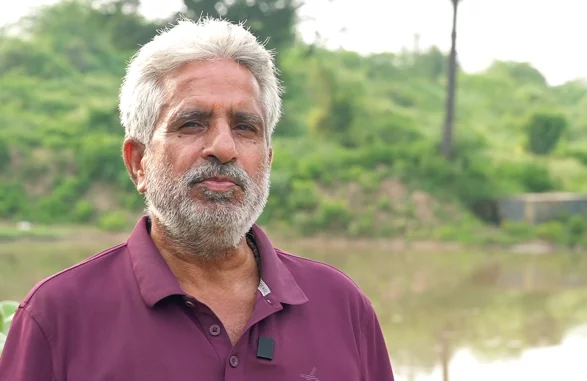
"Water never used to stay in this pond, but now thanks to Safe Water Network, a lot of water is accumulating, and in the night, wild animals like blue bulls, leopards, and wild pigs come here to drink."
Inderpal Singh, Community Member, Dhaula Village