

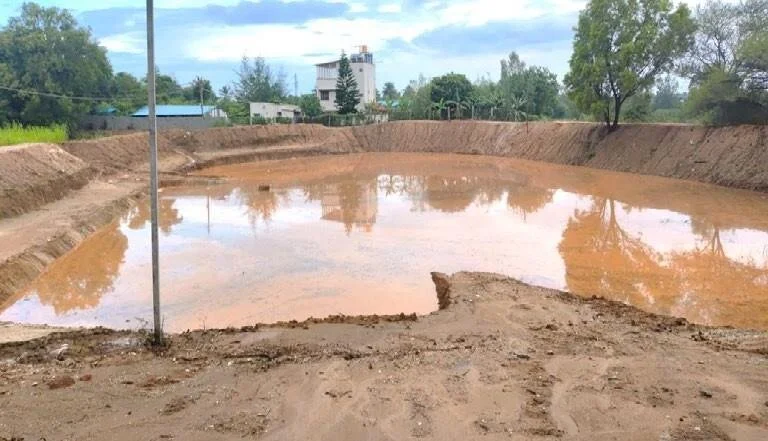
Program Vasundhara: two landscapes, one approach to restoring land and water
Program Vasundhara is Safe Water Network India’s program for environmental sustainability and biodiversity enhancement. It runs from 2024 to 2027 across 114 villages in two landscapes: 43 villages in the Aravalli region of Gurugram, Haryana, and 71 in the peri-urban belt north of Bengaluru, Karnataka. A new book, Program Vasundhara: Restoring Land, Water and Biodiversity, records the work to date. This article summarizes it.
Two landscapes under pressure
The two sites face different versions of the same problem. In Gurugram, deforestation, erosion, mining and falling groundwater have degraded the Aravalli hillsides and the farmland and village ponds below them. In Bengaluru, Aivarakhandapura Lake, a historic water body that supports domestic use, irrigation and fisheries, had filled with silt, weeds and waste, and the village ponds around it had been neglected for decades.
The program’s response is the same in both: restore water bodies and the land that feeds them, help farmers adapt, bring back native vegetation, add clean energy where it matters most, and build the local institutions that will keep all of it working after the program ends.
Water first
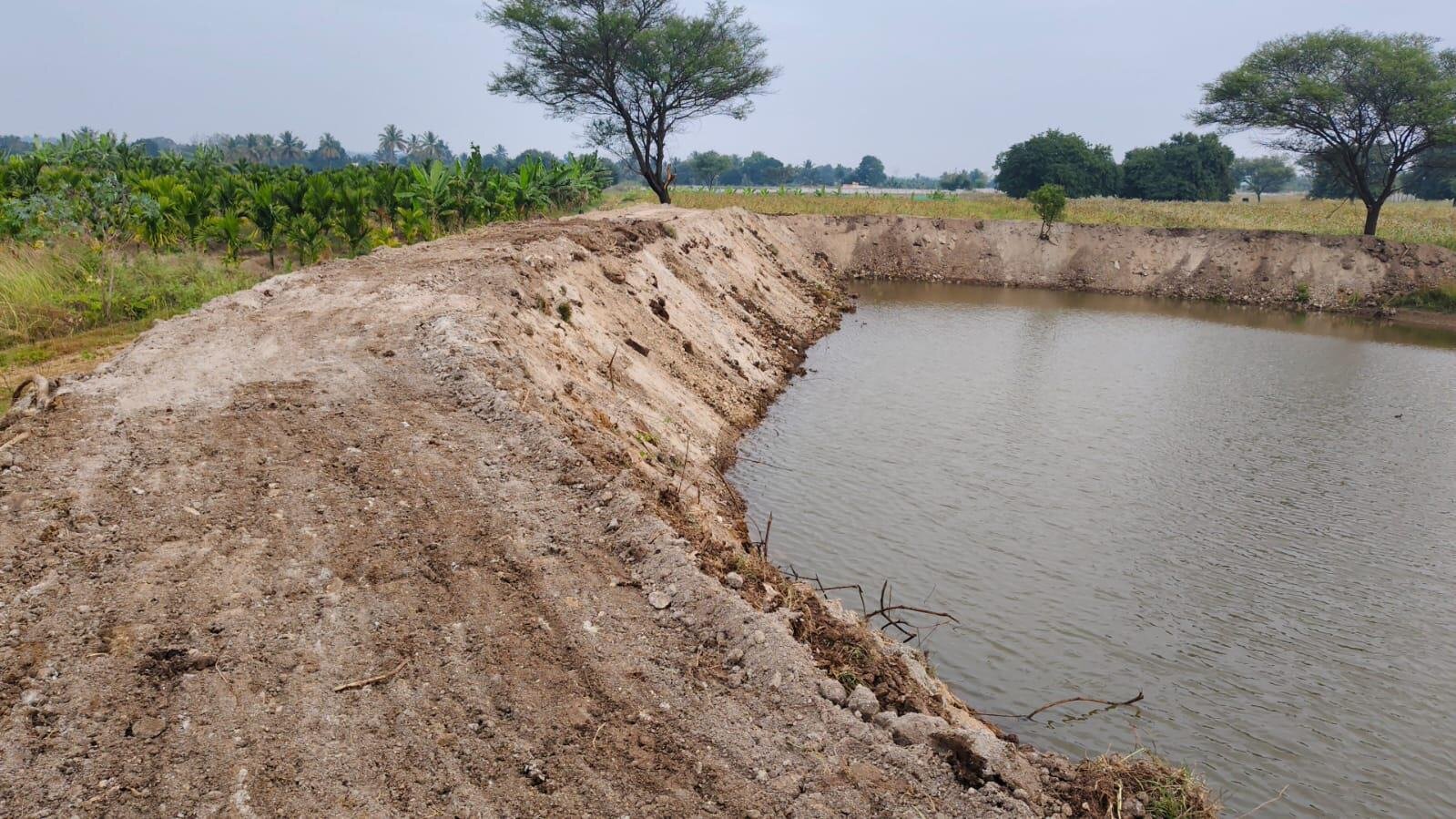
At Aivarakhandapura Lake the program has cleared 25 acres of vegetation and waste, desilted 17 acres, strengthened 1,000 metres of embankment and reconnected the three inlets through which water reaches the lake. Around it, 27 village ponds have been restored across the two geographies, eight of them in Gurugram with the communities and Panchayati Raj Institutions that own them.
Each pond has its own history. Bokipura pond, near Bengaluru, was dug in 1972 during a drought and then forgotten. Sonnenahalli pond had waited 21 years for water. In Teekli, Gurugram, the Bada Talab was cleaned, deepened, bunded and fenced, and now has an open gym and swings on its bank. In Kadnur Gram Panchayat, eight ponds have been rejuvenated and drains desilted, and the Panchayat president reports improved water availability and land quality for farmers.
Keeping the rain on the land
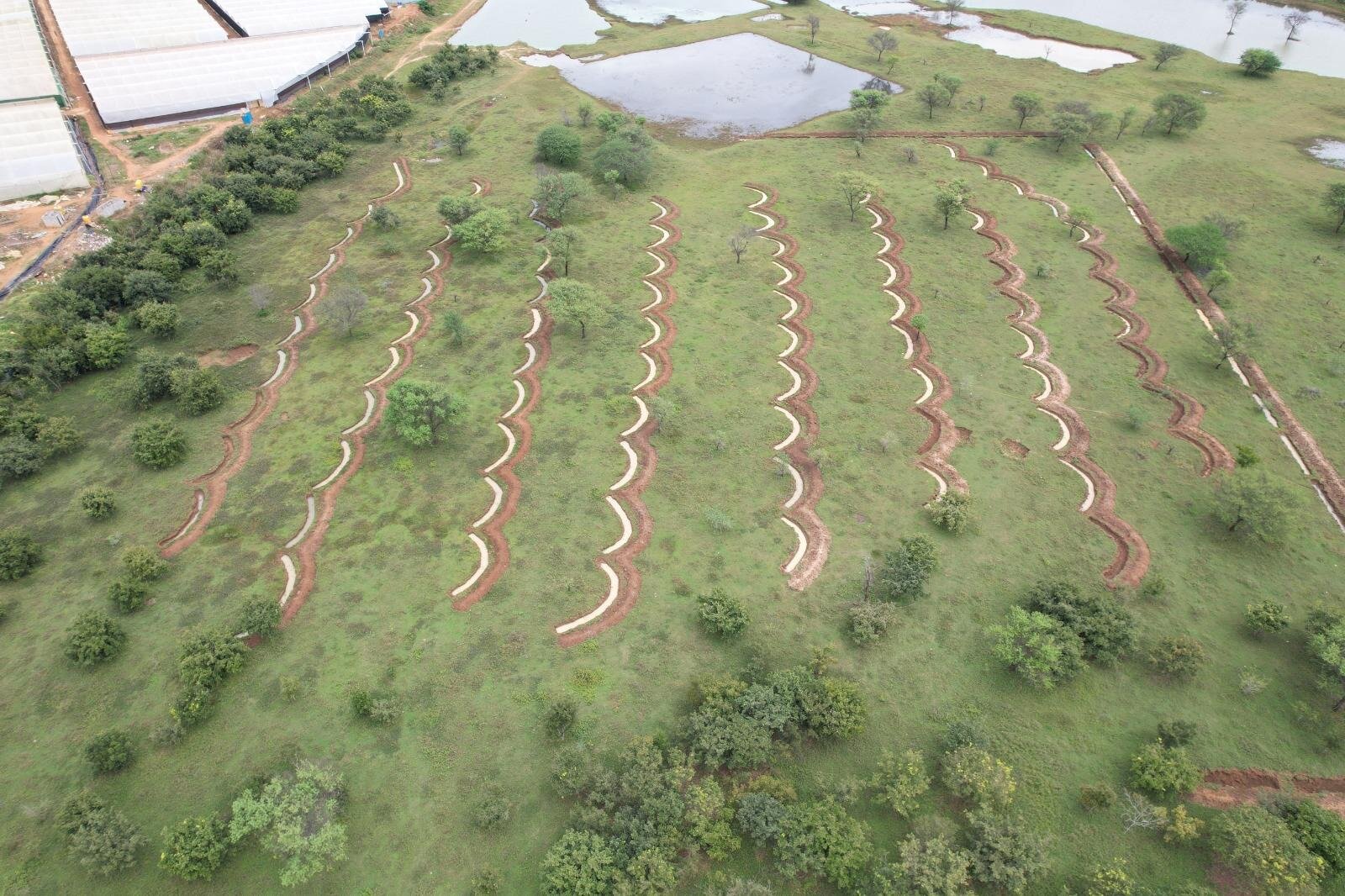
Above the ponds, farm bunds, continuous contour trenches, water absorption trenches and bio-security trenches slow runoff and let rain soak into the soil. In the hills at Honnavara, trenches across 38 acres have refilled two long-dry ponds. On the campus of ICAR’s Central Institute of Freshwater Aquaculture, a restored pond now feeds eight downstream ponds and recharge borewells, and Doha-model trenches across 30 acres have brought water levels back in the borewells. At the Karnataka Milk Federation’s Nandini Sperm Station the same approach now provides year-round water and green fodder.
“Rainwater used to flow away and leave my land dry. Since the farm bunds were built, water stays in my field and the soil stays moist, so my crops give higher yields.” Ravikant, farmer, Kherka
Farming with better information
Vasundhara works with 16,000 farmers across 17,182 hectares. More than 17,000 soil tests for 9,499 farmers feed a digital application that guides nutrient management and crop planning, and automated weather stations in both regions issue advisories on irrigation, fertilisation and pest management through WhatsApp groups. Seventy-eight crop demonstrations covering 18 species, Farmer Field Schools and peer exchange have introduced crop diversification, grafting, raised beds, mulching and drip irrigation. Working together, 344 farmers have prepared 44,100 litres of Jeevamrut, a liquid organic input, and applied it across their fields.
“The testing centre was far away, so I added fertilizer from past experience. The team tested my soil with a probe and in five minutes the report showed high nitrogen. Now I don’t waste money on extra nitrogen fertilizer.” Jai Chand, farmer, Harchanpur
Trees that survive
Planting begins with native, climate-resilient species and continues with watering, mulching and protection long after planting day. More than 15,000 saplings have been planted across 23 locations, with a survival rate above 87 per cent. Two nurseries supply the planting drives and provide livelihoods for the people who run them. Nine medicinal gardens, developed with Primary Health Centres, join plant conservation to traditional knowledge. At Hasanpur Hillock in Sohna, villagers removed garbage, laid sandbags against erosion, dug trenches and planted trees and shrubs along an eco-trail they now use for morning walks.
Power that keeps clinics open
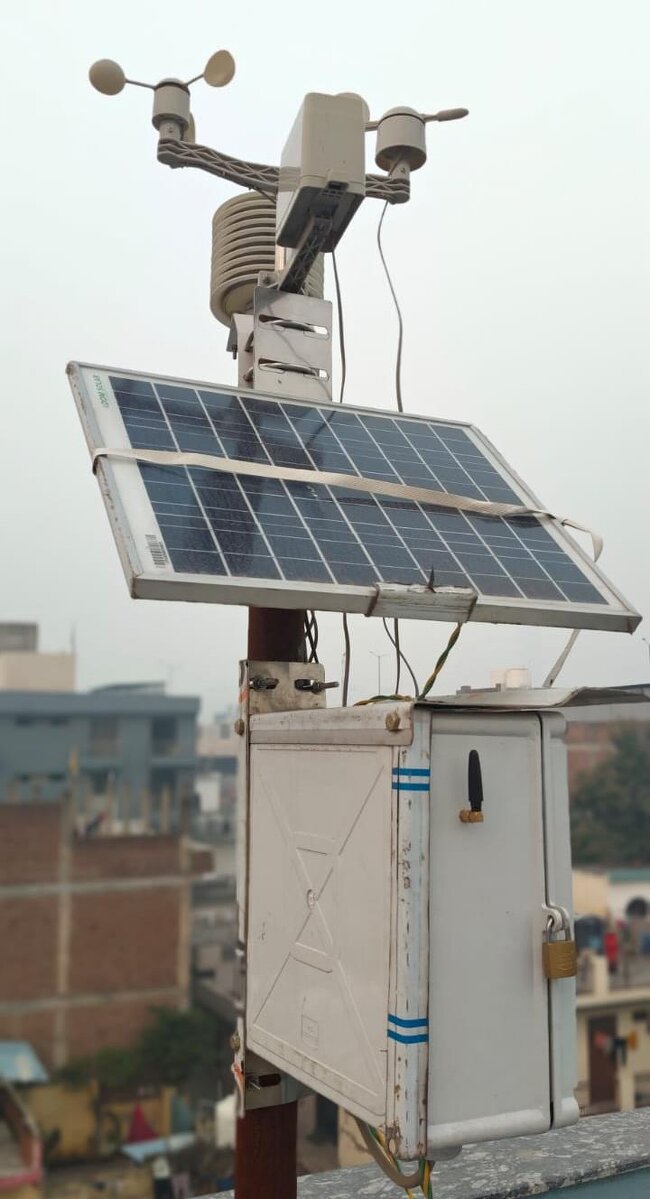
Solar systems now provide reliable electricity to primary health centres, a maternity ward, community centres and street lights in both regions, and local youth in each geography have been trained to install, operate, maintain and repair them. At Sonnenahalli PHC, which treats up to 100 outpatients a day from 27 villages, solar panels and a UPS backup have ended the daily power cuts that disrupted services and threatened the vaccine cold chain. At Aivarakhandapura PHC, which serves 32 villages for childbirth, a battery dedicated to the maternity ward now powers the delivery room, the suction pump and the baby warmer through the night.
“Night-time outages were a major safety risk; we even used torches. With solar and a battery dedicated to this maternal ward, we have electricity for delivery, the suction pump and the baby warmer.” Dr Ratnaprabha, Medical Officer, Aivarakhandapura PHC
The people who carry it
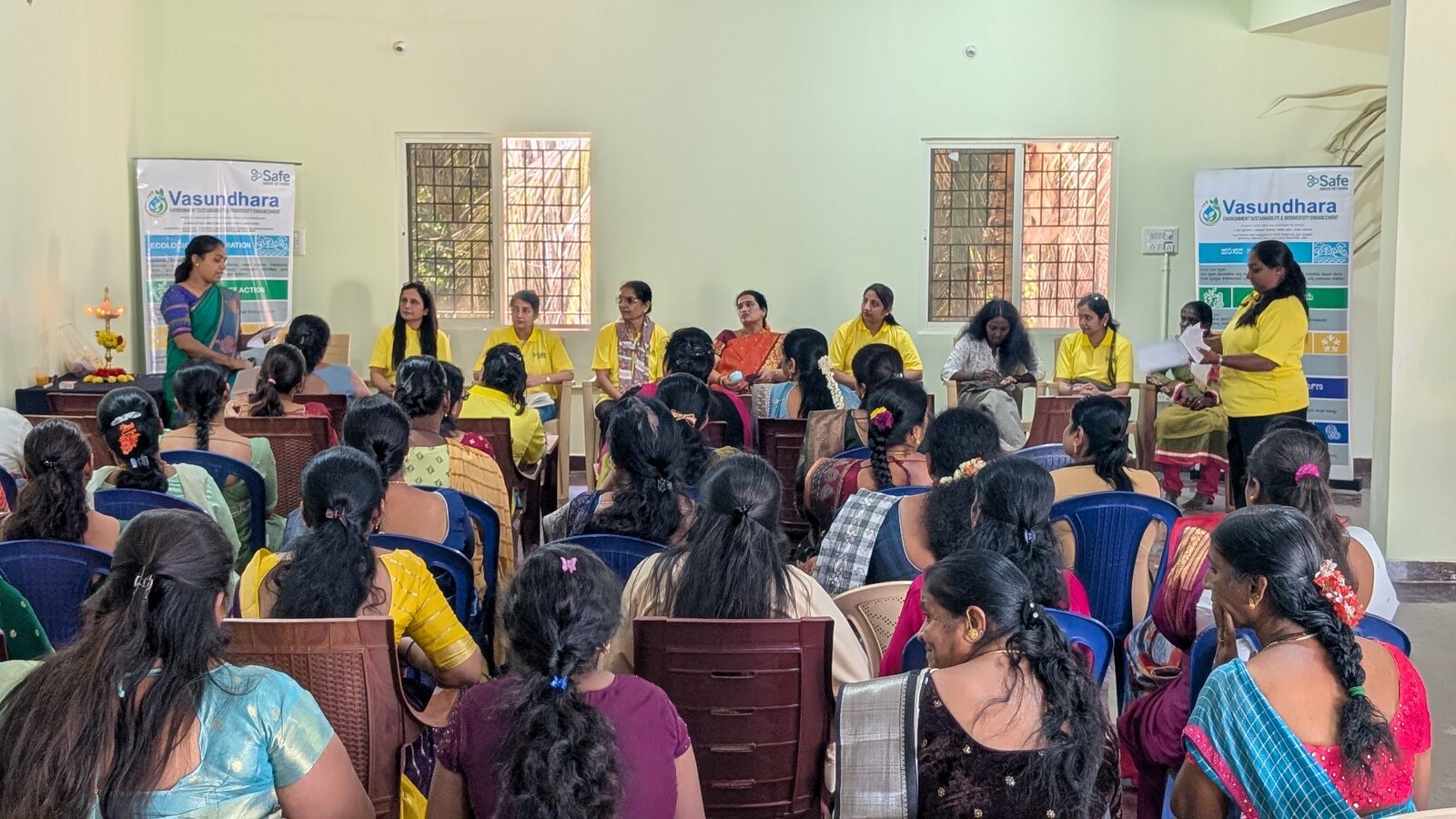
None of this lasts without local ownership. Biodiversity management, forest management, wetland, watershed and medicinal garden committees, formed or revived with village leaders, women, youth and elders, take part in planning and are trained in maintenance. More than 16,000 community members have been trained in local languages across land restoration, water bodies, solar energy, tree care, agriculture and livelihoods, and six practical guides put that training in writing for the next person who needs it.
In Bengaluru the programme works with 134 women’s self-help groups. Nine hundred and fifty women have been trained across nine agriculture-based livelihoods, and 166 of them have started income-generating enterprises: small-scale oil processing, flour and masala milling, mushroom cultivation, ragi snacks, cloth bags, candles and soaps. The groups contribute 30 per cent of the cost themselves.
What is coming back
As ponds hold water and native trees take root, wildlife is returning. Glossy ibis, purple moorhen, shikra and baya weaver have been recorded at the restored sites, along with butterflies, beetles and dragonflies, the Indian bull frog and the blue bull. At the revived MG Colony pond in Gurugram, residents photographed a leopard drinking twenty feet away.
“This Bada Talab was very dirty, with grass over six feet tall and a foul smell. The team cleaned and deepened it, built a bund, planted trees, fenced it and added a gym, swings and benches. Now we often see turtles, fish, birds and peacocks. We are happy.” Pooja, Sarpanch, Teekli village
Where it goes from here

Program Vasundhara has a year to run. The commitment for that year is continuity: ponds maintained by the committees that now own them, saplings grown into trees, solar systems serviced by the youth trained to do it, and the lessons made available to other districts through the guides and partnerships the programme has built with ICAR, the Karnataka Milk Federation, the Haryana Forest Department and the Panchayati Raj Institutions in both states.